News Network of XAUAT — From May 22 to 24, the 2026 Academic Forum of the Association for Cultural Economics International (ACEI) was held on XAUAT’s Yanta Campus. The forum brought together scholars and researchers to explore key issues including cultural heritage conservation and green sustainable development, regional cultural collaborative governance, and rural revitalization and regional coordination.
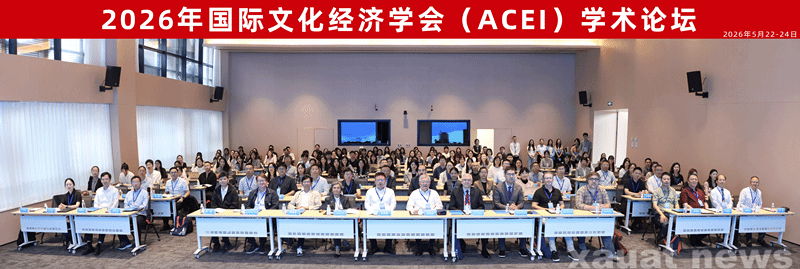
Vice President Gao Xukuo attended the event, together with faculty members and students from the School of Public Administration.
The forum was jointly organized by ACEI and Xi’an University of Architecture and Technology (XAUAT), and hosted by the School of Public Administration and the Innovation Base for Talent Recruitment and Discipline Development in Cultural Heritage Governance and Urban Sustainable Development. Co-organizers included Shanghai Jiao Tong University, Wuhan University, Central University of Finance and Economics, and the Shaanxi Cultural Industry Association.
More than 100 experts and scholars from over 30 universities and research institutions in China and abroad participated in the forum. The program featured an opening ceremony, keynote speeches, expert roundtable discussions, parallel sessions, the inauguration ceremony of the ACEI Xi’an Workstation (China Branch), a young scholars’ workshop, and a closing ceremony.
In his opening remarks, Vice President Gao Xukuo welcomed the distinguished guests and participants. He noted that the forum reflected ACEI’s strong recognition of the contributions of Chinese scholars to the field and provided a high-level platform for international academic exchange and collaborative innovation in cultural economics. He expressed the hope that the forum would further advance international cooperation in cultural economics and contribute robust academic support to the sustainable utilization of global cultural heritage.
Opening remarks were also delivered by Professor Karol Jan Borowiecki, President of ACEI, and Professor Zhan Shaowen, Dean of the School of Public Administration.
During the keynote session, experts from China and abroad shared insights on a range of frontier topics, including the role of cultural heritage in socioeconomic development, policies for sustainable local development, efficiency evaluation of World Heritage cities, emerging forms of the creative economy in the age of artificial intelligence, and the use of digital technologies to support the sustainable development of intangible cultural heritage. The expert roundtable discussions focused on cultural heritage and sustainable development, the integration of culture, sports, commerce, and tourism, as well as international research collaboration and academic exchange.
Parallel sessions provided opportunities for scholarly dialogue on cultural heritage conservation, regional collaborative governance, rural revitalization, digital industrial upgrading, and the high-quality development of cultural tourism. During the Young Scholars’ Workshop, early-career researchers engaged in discussions on empirical research methods, interdisciplinary research approaches, and the application of AI tools in academic research.
The forum also witnessed the inauguration of the ACEI Xi’an Workstation (China Branch). Paul Crosby, Secretary General and Chief Financial Officer of ACEI, introduced the Association’s global development strategy and highlighted the significance of establishing the China Chapter. Professor Zhan Shaowen announced the formation of the workstation, read out the membership list of the Academic Committee, and presented appointment certificates to the Committee’s Chair and Vice Chairs.
Bringing together leading scholars from across the world, the forum promoted interdisciplinary dialogue and international academic exchange, strengthened mutual learning and research collaboration, and fostered consensus on key issues in cultural economics. The event contributed valuable insights toward innovation in cultural economic development and the sustainable utilization of cultural heritage worldwide.